Equipment
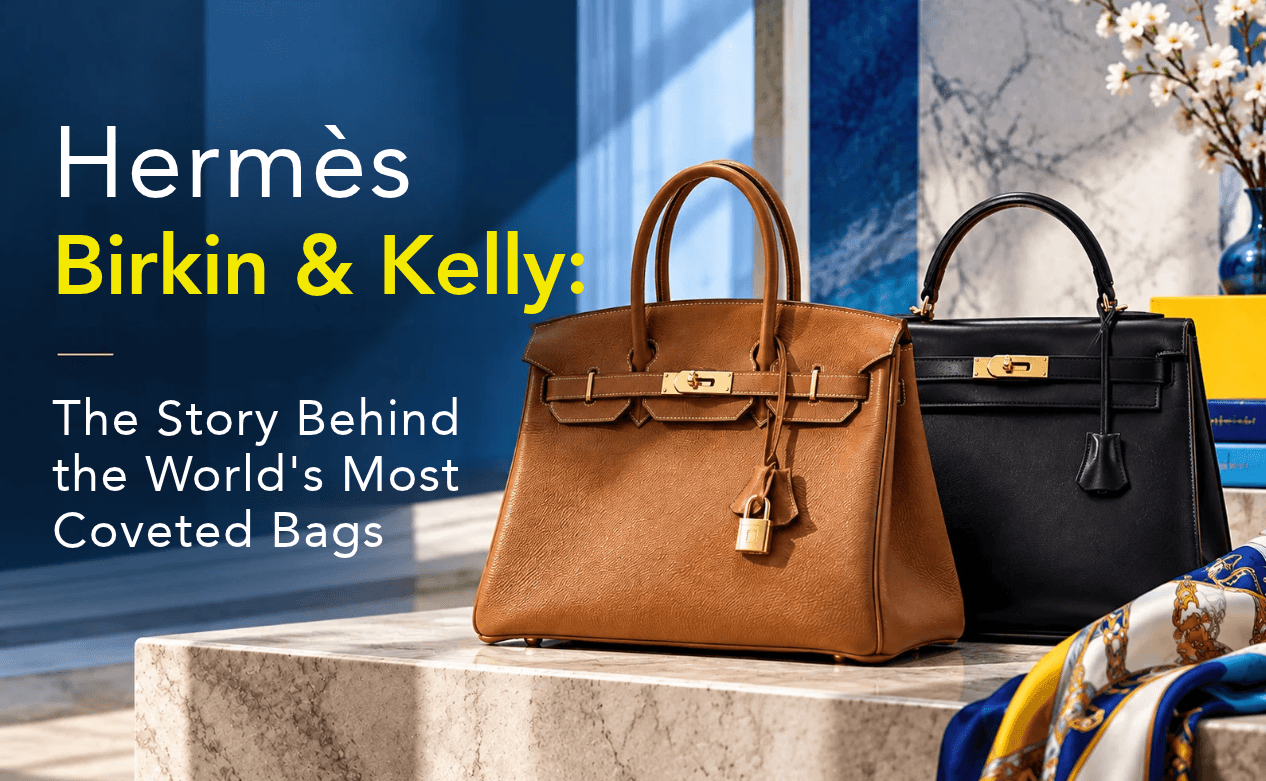
Hermès Birkin & Kelly: The Story Behind the World's Most Coveted Bags
Discover why Hermès Birkin and Kelly bags command premium prices, how scarcity and craftsmanship shape their value, and what collectors should know.


Walk into an Hermès boutique with a million, and you could still walk out empty-handed.
Not because the boutique doesn't have a Birkin or Kelly bag.
Not because you can't afford one.
But because Hermès may simply decide not to sell you one.
In a world where you can buy almost anything with enough money, the Birkin and Kelly occupy a rare category: products money alone cannot guarantee. There is no online checkout, no publicly displayed inventory, and no official waiting list. Instead, access is built on relationships, timing, and an exclusivity model that has fascinated luxury collectors for decades.
That exclusivity has created something remarkable.
What began as two leather handbags has evolved into a global phenomenon where certain Birkin and Kelly models regularly command premiums on the secondary market, attract fierce competition at international auctions, and are increasingly discussed alongside collectible watches, fine art, rare whisky, and classic cars.
So, "Why the craze?"
Why do some of the world's wealthiest willingly spend 100’s of thousands, and even millions, on a handbag?
The answer has little to do with fashion.
It lies in a masterclass on scarcity, craftsmanship, psychology, cultural capital, and the economics of collectibles. The Birkin vs Kelly debate isn't merely about choosing between two iconic handbags; it's about understanding how certain luxury objects transcend consumption to become enduring stores of value.
In this article, we'll explore how two handbags became symbols of modern wealth, why collectors compete for them, and what investors can learn from the economics behind one of the world's most coveted luxury assets. [1]
Two Bags. Two Legends. One Luxury Empire.
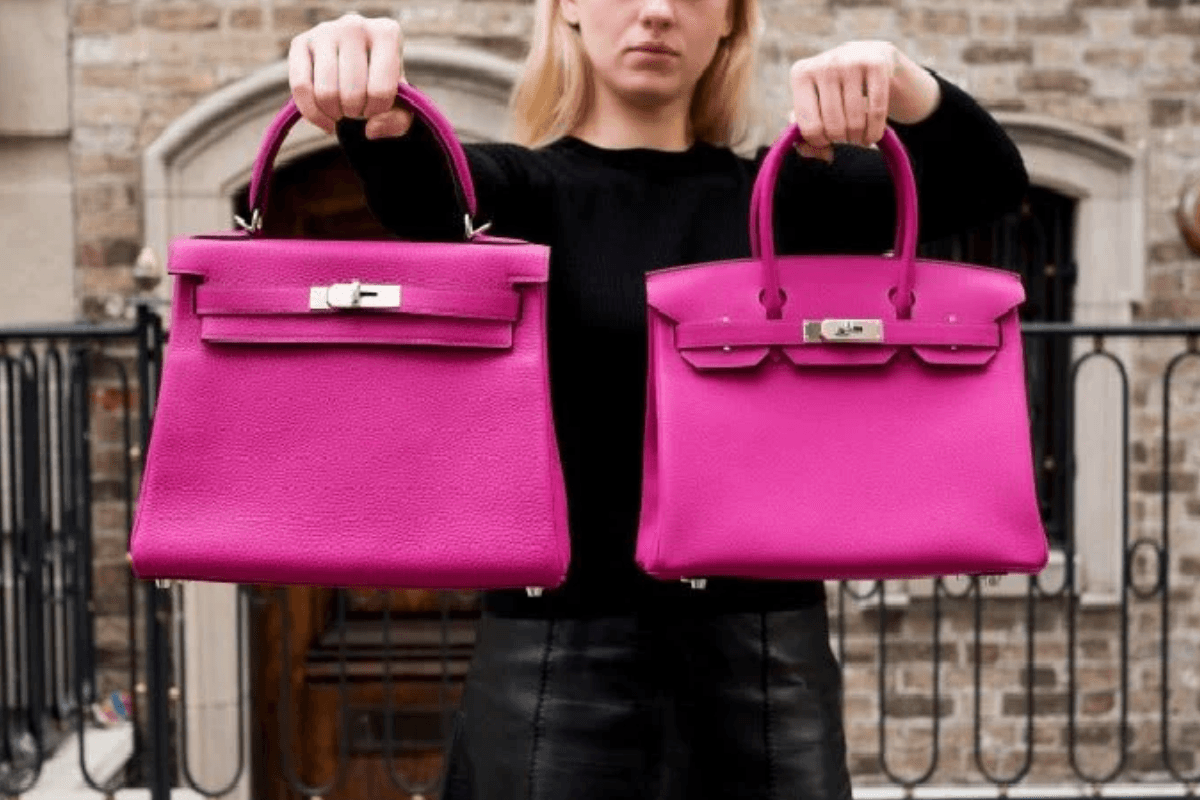
Long before the Birkin became the unofficial handbag of billionaires and the Kelly became synonymous with royal elegance, Hermès wasn't a fashion house at all.
It was a saddlery.
Founded in 1837 by Thierry Hermès in Paris, the company built its reputation crafting premium harnesses and saddles for European nobility. Precision, durability, and meticulous handcrafting weren't marketing slogans; they were the foundation of the business. Those same principles would eventually define two of the most coveted handbags in history.
The first icon arrived decades before anyone had heard of Jane Birkin. [2]
The Kelly: A Princess Creates an Icon
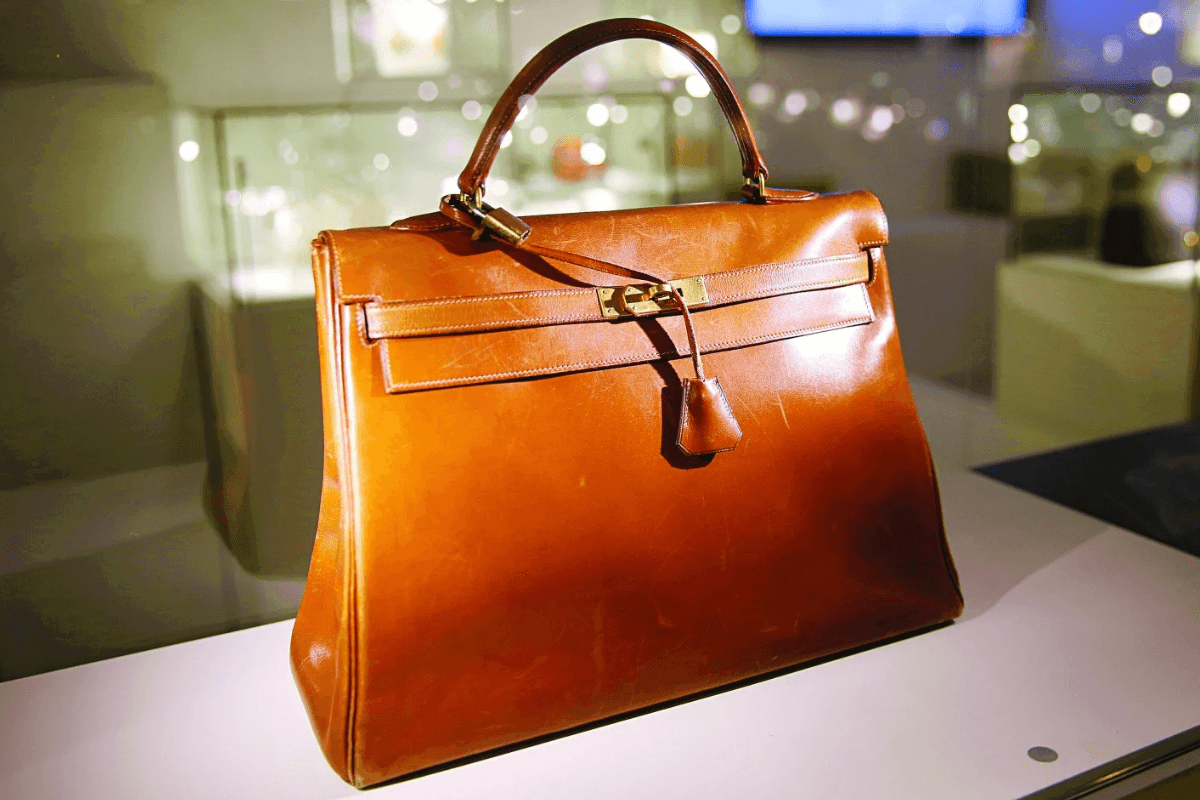
In the 1930s, Robert Dumas, son-in-law of Émile Hermès, designed a structured leather handbag known simply as the Sac à Dépêches. With its trapezoidal silhouette, clean lines, and saddle-inspired construction, it reflected Hermès' equestrian heritage while introducing a distinctly modern aesthetic.
A decade later, the bag found an unlikely ambassador on screen. In Alfred Hitchcock’s 1954 film To Catch a Thief, Grace Kelly carried the Sac à Dépêches as part of her character’s wardrobe, giving the understated design a Hollywood association.
Then came a moment that no marketing campaign could have bought.
In 1956, Grace Kelly, Hollywood actress turned Princess of Monaco, was photographed holding the bag in front of her growing baby bump to shield herself from paparazzi. The image was published around the world, transforming an understated handbag into an international symbol of sophistication and discretion. The association became so powerful that Hermès eventually renamed the bag ‘Kelly’ in her honour.
The Birkin: Born at 30,000 Feet

Nearly three decades later, another chance encounter would reshape the luxury industry.
In 1984, actress and singer Jane Birkin sat next to Jean-Louis Dumas, then Executive Chairman of Hermès, on a flight from Paris to London. After her belongings spilt from an overfilled handbag, she remarked that she had never found a bag that was both elegant and practical for everyday life.
Legend has it that Dumas reached for an aeroplane sickness bag and began sketching what would become the Birkin, a spacious, functional tote inspired by Hermès' equestrian roots but designed for the modern woman. Hermès introduced the bag later that year, unknowingly creating one of the most influential luxury products ever made.
In reality, they embody the same philosophy.
Neither bag became iconic because Hermès set out to create a status symbol. They became legends because each represented exceptional craftsmanship, timeless design, and an authentic story that resonated across generations.
When a Birkin Became a $10.1 Million Collectible.
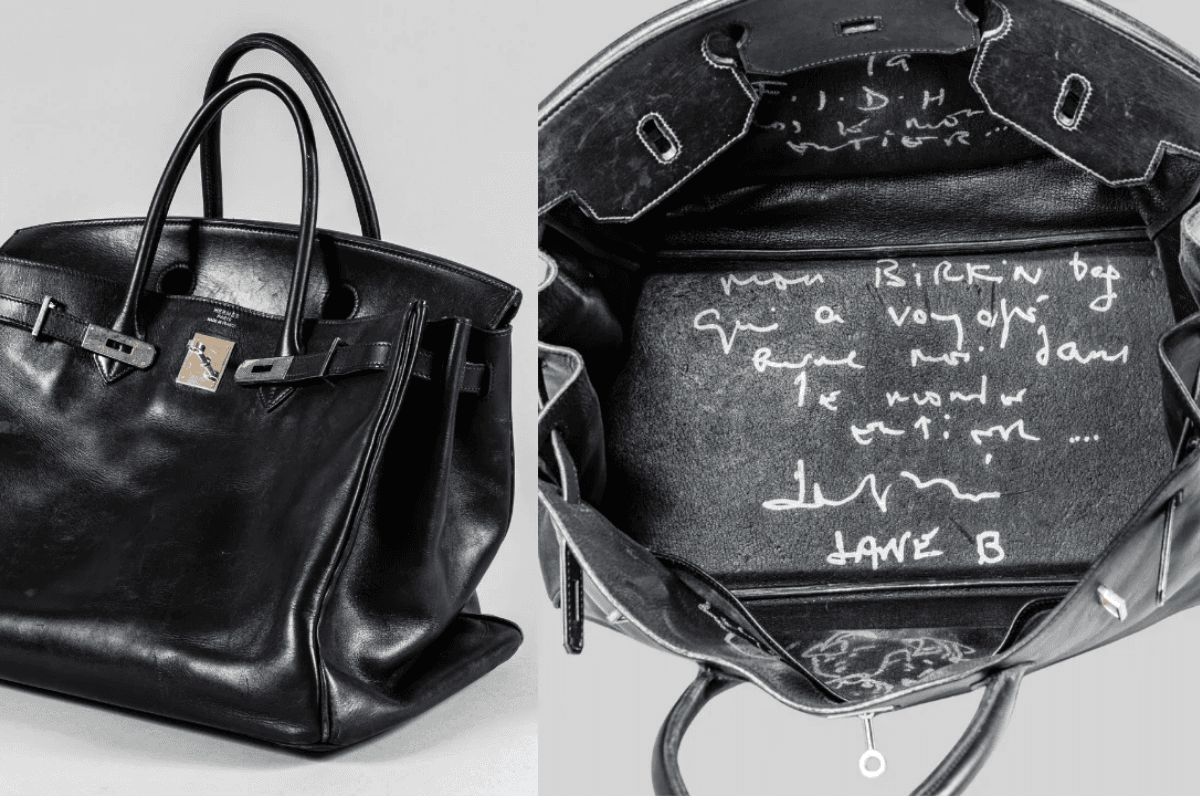
The Birkin's journey from handbag to collectible is perhaps best illustrated by Jane Birkin's original prototype. The one-of-a-kind bag she carried for years sold at Sotheby's Paris in July 2025 for €8.58 million ($10.1 million), setting a world auction record for a handbag. Its value came not simply from Hermès craftsmanship, but from its provenance: it was the original Birkin, created for the woman whose name the bag carries. [3]
The prototype featured unique dimensions, experimental hardware and Jane Birkin's initials, while its years of personal use and distinctive stickers became part of its history.
Why You Can't Simply Buy a Birkin or Kelly: The Economics of Exclusivity.
In most luxury markets, demand follows supply.
If a product becomes wildly popular, brands increase production, open more stores, and sell more units. Hermès has spent decades doing precisely the opposite.
The French luxury house has built one of the world's most successful businesses by making its most desirable products intentionally difficult to acquire. There is no "Add to Cart" button for a Birkin or Kelly, no publicly available inventory, and no official global waiting list. Instead, access is often determined by long-term client relationships, purchase history, and boutique allocation, a strategy that has become known among collectors as the Hermès Game.
This isn't accidental.
It is one of the most sophisticated applications of scarcity economics in the luxury industry.
Scarcity Is the Product
Unlike brands that chase volume, Hermès protects desirability by limiting production.
Every Birkin and Kelly is handcrafted by a single artisan who undergoes years of training before earning the right to produce these bags. The company continues to expand its leather workshops gradually rather than dramatically increasing output, even as global demand grows. This deliberate pace helps preserve craftsmanship while preventing oversupply.
The result is a paradox rarely seen in consumer markets. The harder the bags are to obtain, the more people want them.
Economists describe this as the Veblen Effect, in which demand increases with price because exclusivity itself becomes part of the product's appeal.
For Hermès, scarcity isn't a side effect.
It is the business model.
The Hermès Game
Ask seasoned collectors how to buy a Birkin, and few will tell you to simply walk into a boutique.
Instead, many describe a process of building a relationship with a sales associate over time, purchasing other Hermès products such as scarves, ready-to-wear, jewellery, homeware, or shoes before eventually being offered the opportunity to buy a quota bag.
Hermès has never published a formal formula for receiving a Birkin or Kelly, and individual experiences vary by boutique, region, and client history. That ambiguity has only deepened the mystique surrounding the brand.
Ironically, the uncertainty creates even greater demand.
When consumers cannot predict if, or when, they will gain access, the perceived value of the product rises.
Hermès' controlled distribution has created a market beyond its boutiques: a global secondary market where collectors compete for bags they cannot easily acquire at retail.
Rare colours, exotic leathers, limited editions, sought-after sizes and pristine condition can command substantial premiums at auction and through specialist resale platforms. The market has also created its own hierarchy, with certain Birkin and Kelly configurations consistently attracting stronger demand than others.
But no bag illustrates the economics of this market quite like the Himalayan Birkin.
The Himalayan Birkin: The Holy Grail of Hermès Collecting
The Himalayan Birkin sits at the extreme end of the Hermès secondary market. Its distinctive ombré finish, rare Niloticus crocodile construction and, in the most exceptional examples, diamond-set 18-karat white-gold hardware have made it a benchmark for high-end handbag collecting. Sotheby's describes the Himalayan as a long-standing favourite among collectors, with pristine examples continuing to command significant premiums in the secondary market. Since 2021, Sotheby's has sold nearly US$6 million worth of Himalayan Birkin bags.
Auction history reinforces that demand. In 2018, Christie's sold a Himalaya Birkin 30 with 18-karat white-gold and diamond hardware for £162,500 in London. Later that year, a Himalaya Birkin 35 with diamond hardware achieved £236,750, setting another European auction record.
The Himalayan's appeal, however, is not simply about one extraordinary bag. It demonstrates how the secondary market assigns value when scarcity, craftsmanship and collector demand converge. Even within the Himalayan category, size, condition, date stamp and hardware can materially affect prices. Sotheby's notes that the Birkin 25 is particularly sought after, while pristine examples with recent date stamps command the strongest prices.
And the Himalayan is no longer the only Hermès bag commanding this level of collector attention. Small-format Birkins, Mini Kellys, special-order pieces and limited editions have also emerged as highly sought-after categories, showing that the secondary market increasingly rewards rarity and configuration, not simply the Hermès name.
Want to explore the world of collectibles beyond Hermès? Read our latest article on [Income-Generating Collectibles: How Art, IP & Scarce Assets Build Wealth] to understand what makes an object collectible, how these assets are valued, and where they fit within a diversified portfolio.
When Does a Luxury Purchase Become an Investment?
A Birkin or Kelly is, first and foremost, a luxury purchase, not a financial product. Not Every Birkin Is an Investment. One of the biggest misconceptions is that every Hermès bag appreciates. It doesn't.
Just as not every Rolex becomes collectible or every painting becomes museum-worthy, only a small subset of Birkin and Kelly bags command extraordinary premiums.
Collectors typically place the highest value on:
Limited-production colours
Exotic leathers such as Niloticus Crocodile and Alligator
Mini Kelly and Birkin 20/25 sizes
Special-order (Horseshoe Stamp) bags
Diamond hardware editions
Exceptional provenance
Store-fresh condition with complete documentation
The further a bag moves from standard production and the closer it gets to rarity, the stronger its long-term collector appeal tends to become. Recent market data also shows that collector interest is expanding beyond the famous Himalayan editions to include special-order pieces, Kelly Dolls, Cargo Birkins, and other limited creations.
The Secondary Market Tells the Real Story
At what point does a handbag stop being fashion and start behaving like a collectible?
The answer lies in the secondary market.
According to Sotheby's, demand for pristine Birkin and Kelly bags has remained remarkably resilient despite multiple boutique price increases. In 2025, sales of Birkin and Kelly bags through Sotheby's grew significantly, while average selling prices also increased, demonstrating that collector demand continues to extend well beyond retail availability.
Some models command extraordinary premiums.
The Kelly Pochette, for example, has emerged as one of the strongest performers in the Hermès ecosystem, with pristine examples in sought-after colours selling for several times their original boutique price. Mini Kellys and Birkin 25s continue to rank among the most competitive categories globally.
For many collectors, it is the equivalent of a Patek Philippe Grandmaster Chime, a Ferrari 250 GTO, or a Picasso masterpiece, an object so rare that ownership itself becomes a marker of access, taste, and wealth.
Despite its name, the Himalayan Birkin has nothing to do with the Himalayan mountains.
Nor is it made from Himalayan crocodiles.
The name refers to its breathtaking colour gradient, a painstaking ombré finish that transitions from smoky grey to pristine white, designed to resemble the snow-capped peaks of the Himalayas. Achieving this effect requires exceptional craftsmanship and careful selection of Niloticus crocodile skins, making every bag subtly unique.
That complexity is one reason why production remains extraordinarily limited.
0m The finest examples are crafted from Matte Niloticus Crocodile, finished with 18-karat white gold hardware, and in the rarest editions, adorned with pavé-set diamonds.
Birkin vs Kelly: Which Holds Value Better?
If you're choosing between a Birkin and a Kelly solely on aesthetics, there is no wrong answer.
But collectors and alternative asset investors ask a different question:
Which bag has the stronger long-term value proposition?
The answer is more nuanced than "Birkin is better."
Both bags sit at the top of the luxury resale market, but recent market data reveals that their performance depends on factors far beyond the name embossed on the leather.
But the Kelly Is Quietly Catching Up
Yet the Kelly tells a more nuanced story. Certain formats command substantial premiums despite the model's broader resale correction.
The Mini Kelly 20, Kelly 25 Sellier, and Kelly Pochette frequently sell for multiples of their boutique prices. Pristine Mini Kellys can command US$28,000–US$36,000+, despite retail prices being a fraction of that.
This shift highlights an important lesson for investors: The market no longer rewards every Birkin equally. Increasingly, it rewards rarity, size, and configuration.
At Afinue, we believe that understanding wealth means looking beyond conventional investments. From private markets and real estate to fine art, rare collectibles, and luxury assets, modern portfolios are becoming increasingly diversified, not because every collectible outperforms traditional investments, but because some possess characteristics that make them compelling stores of long-term value.
The Birkin and Kelly are more than luxury handbags.
They are reminders that, in the world of alternative assets, the most valuable investments are often those where scarcity, story, and timeless desirability converge. And for discerning investors, understanding why an asset commands value is just as important as knowing what it costs.

Get Our Newsletter
You to create a robust alternate asset portfolio.Related Insights

Aircraft Leasing in India: The Capital Strategy Behind Every Flight
A comprehensive guide to aircraft leasing, GIFT City, lease structures, regulatory reforms, and the economics behind airline fleet expansion.
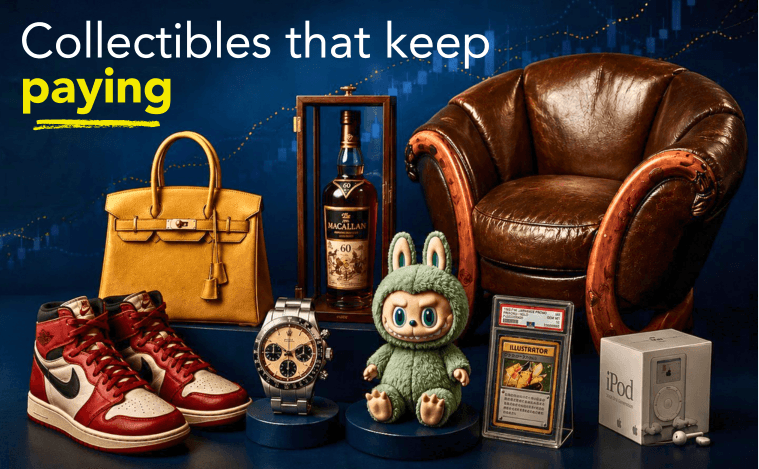
Income-Generating Collectibles: How Art, IP & Scarce Assets Build Wealth
From Labubu dolls to intellectual property rights, collectibles have become capital.
Operating Lease
With growing industrialization, and diversification across the value chain, fixed asset purchase and financing have become a key area of disruption.
Aircraft Leasing in India: The Capital Strategy Behind Every Flight
A comprehensive guide to aircraft leasing, GIFT City, lease structures, regulatory reforms, and the economics behind airline fleet expansion.
Income-Generating Collectibles: How Art, IP & Scarce Assets Build Wealth
From Labubu dolls to intellectual property rights, collectibles have become capital.
Operating Lease
With growing industrialization, and diversification across the value chain, fixed asset purchase and financing have become a key area of disruption.