Real Estate
Fractional Ownership in India: History, REITs & AIFs Explained
Discover how fractional ownership in India evolved from communal risk sharing to modern regulated investments like REITs and AIFs.



In India, high-quality real estate is no longer just about price; it is about accessibility. Prime assets in cities like Mumbai, Bengaluru, and other cities now require crores in upfront capital. . At the same time, the Alternative Investment Fund (AIF) industry has crossed ₹15 lakh crore in commitments, reflecting investor appetite for pooled, asset-backed structures.
At the same time, investors are shifting away from volatile public markets and seeking steady, asset-backed returns.
This gap between aspiration and affordability is why fractional ownership is no longer a niche. It has become essential.
It may sound like a modern concept powered by fintech platforms and digital marketplaces. However, the idea itself is ancient. Long before stock markets, corporations, or even formal money systems existed, people pooled resources to survive, grow, and build.
At its core, fractional ownership means multiple participants contribute capital (or historically, labour and tools) toward an asset and receive proportional rights to its income and appreciation.
In today’s world, this allows investors to access expensive assets, such as real estate, infrastructure, or collectables, without having to purchase the entire asset themselves. Returns from fractional ownership typically come from two sources:
Income - rent, yield, or cash flow generated by the asset
Capital appreciation - growth in the asset’s value over time
Today, fractional ownership is more organised, more transparent, and supported by technology. In a world where assets are expensive and capital is increasingly mobile, this age-old concept feels more relevant than ever.
Early Human Societies: Ownership as Survival
Fractional Ownership: Genesis and History
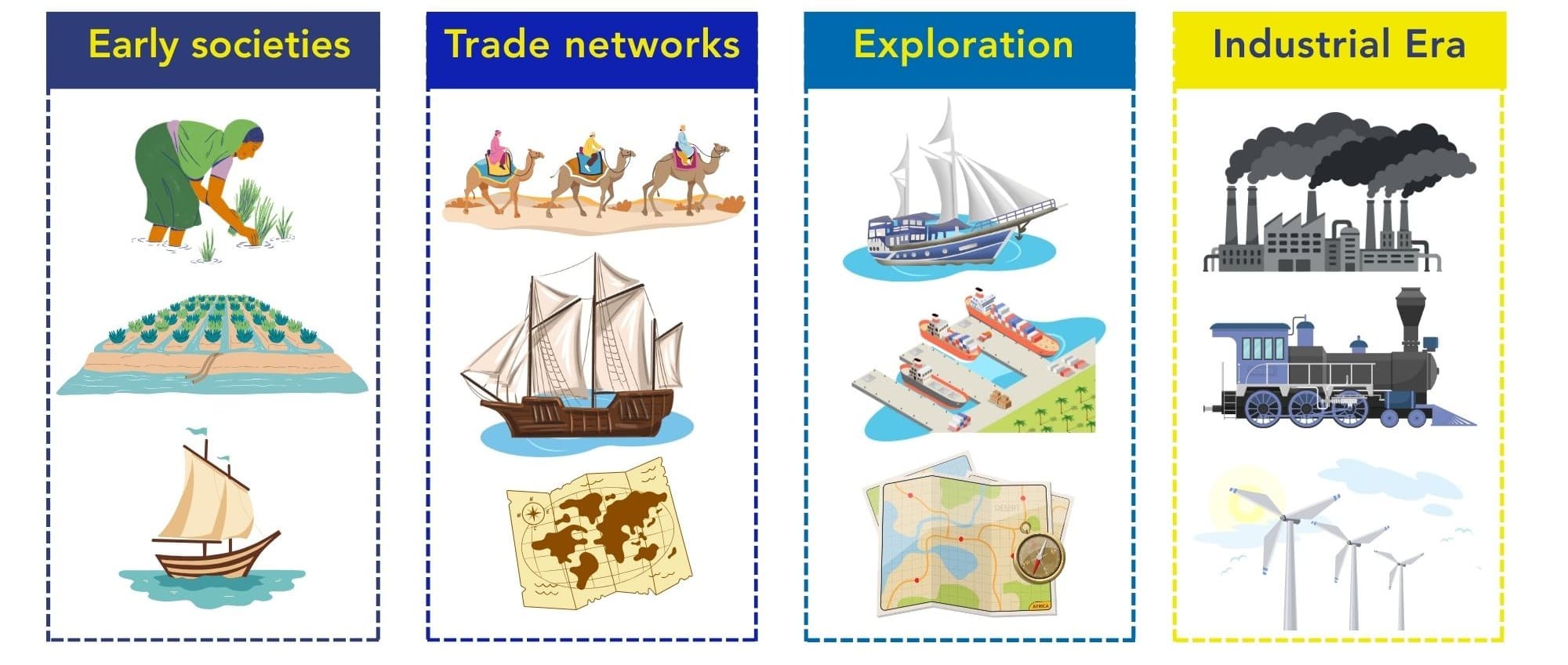
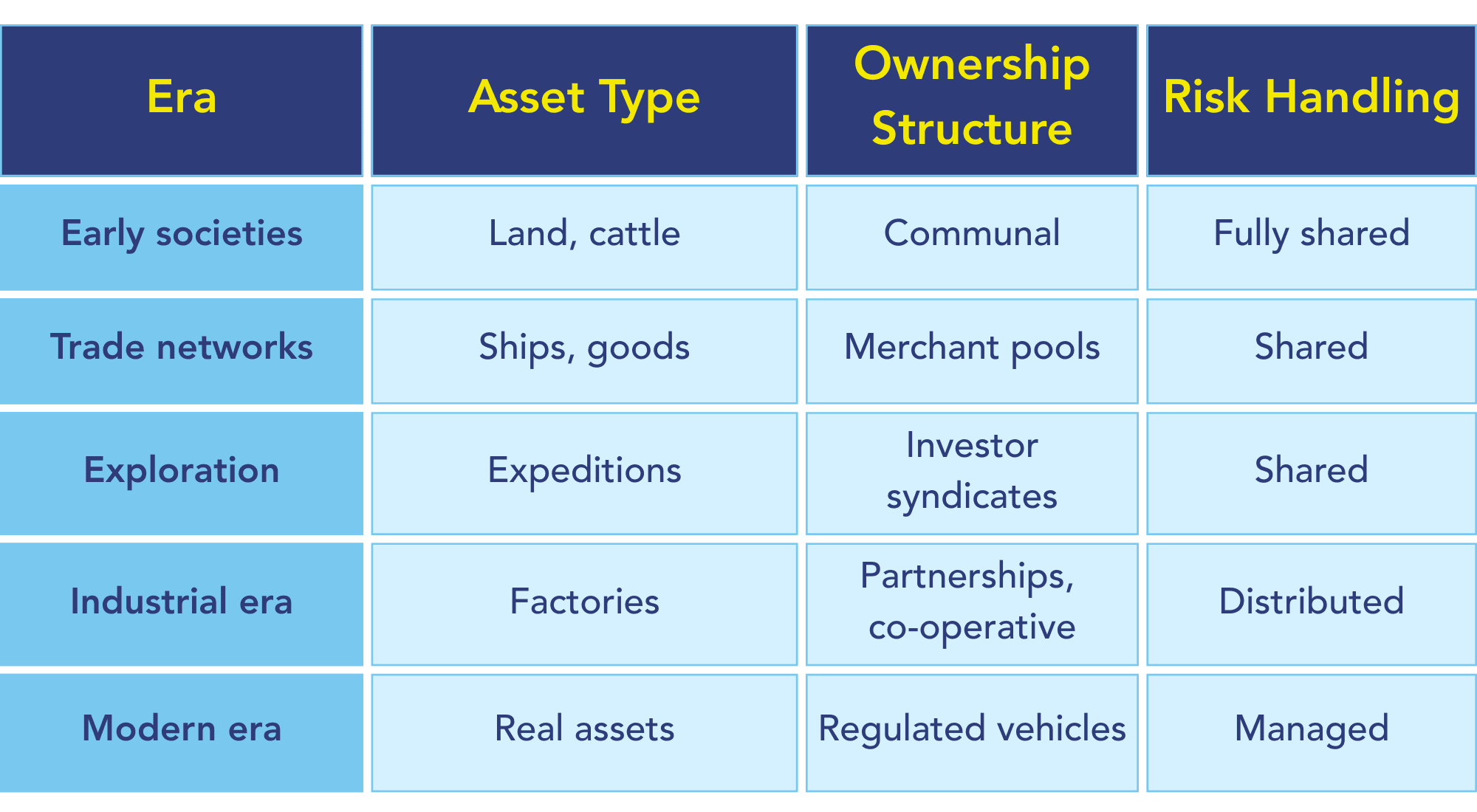
In early societies, shared ownership was not strategic; it was a necessity. Farming land, building boats, storing food, and constructing irrigation systems required collective effort. No individual had sufficient resources to absorb all the risk on their own.
Production and survival were communal. If crops failed, everyone suffered. If harvests thrived, everyone benefited. Trust was the operating framework.
Ancient Trade Networks: Scaling Beyond the Individual
As trade expanded across Asia, the Middle East, and Europe, shared ownership evolved into structured merchant pooling systems. Caravans and ships required significant capital and carried substantial risk, storms, theft, political conflict, and delay.
Merchants pooled funds to finance voyages jointly. Profits and losses were distributed according to each contribution. This early capital syndication laid the groundwork for scalable commerce.
The Age of Exploration: Investing in Uncertainty
Exploration pushed shared ownership even further.
Sea voyages, whaling expeditions, and overseas trade required huge investments with no guarantee of success. Ships could sink, voyages could fail, and many never returned.
These missions were usually funded by groups of investors, rather than individually. Each investor owned a share of the ship and its cargo. If the journey was successful, the profits were shared. If it failed, losses were spread across the group.
Once again, fractional ownership made ambitious projects possible by spreading risk.
The Industrial Era: Ownership Meets Scale
The Industrial Revolution marked a structural shift. Factories, railways, and mills required capital beyond the capacity of individuals or small guilds.
Partnerships, cooperatives, and early joint-stock companies became dominant ownership models. Capital pooling enabled industrial scale while distributing financial exposure.
The growth of Cooperatives has transcended from agricultural communities to manufacturing and production centres. In the 19th and early 20th centuries, many countries witnessed the rise of cooperative societies of workers, producers, and consumers. These collective ownership structures pooled resources, shared risks, and enabled growth beyond what individuals could achieve alone.
A recurring pattern emerges across history: when opportunity exceeds individual capacity, fractional ownership becomes the economic solution.
The Rise of Modern Markets: Structure and Regulation
As financial systems matured, fractional ownership became legally formalised. Joint-stock companies, partnerships, and publicly listed firms allowed ownership to be divided into transferable shares protected by law.
Regulation introduced transparency, governance, and investor rights, replacing informal trust structures with an enforceable legal framework.
In modern India, regulated vehicles such as REITs and Alternative Investment Funds (AIFs), governed by frameworks under SEBI, represent institutionalised forms of fractional ownership.
Under SEBI regulations, Indian REITs must distribute 90% of net distributable cash flows to investors. This requirement makes them structured, income-focused fractional vehicles designed to pass through operational cash flows rather than retain earnings like traditional corporations.
This regulatory mandate distinguishes REITs from informal pooling models and reinforces their role as disciplined, yield-oriented structures within India’s capital markets.
Read more: Sizing REITs: Small, Medium or Extra Large?
Evolution in Modern Markets
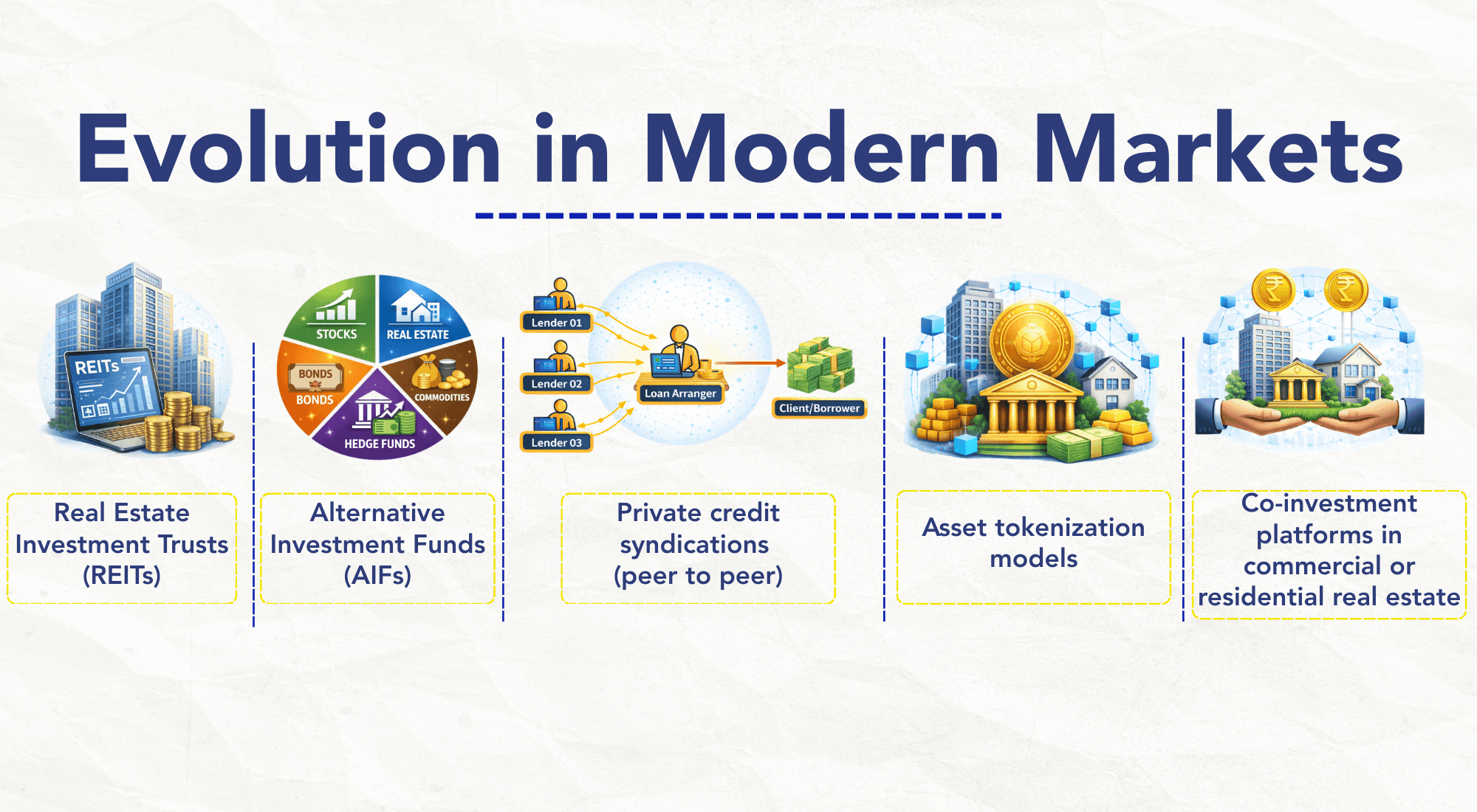
Today, fractional ownership appears in structured forms such as:
● Real Estate Investment Trusts (REITs)
● Alternative Investment Funds (AIFs)
● Private credit syndications
● Asset tokenisation models
● Co-investment platforms in commercial or residential real estate
Risks and Considerations in Fractional Ownership
While fractional ownership enhances access to high-value assets, it is not without structural and operational risk. Investors must evaluate:
Liquidity constraints - many investments have fixed lock-in periods and limited secondary markets
Governance and management quality - asset performance often depends on sponsor expertise.
Fee structures and expense layers - management, performance, and structuring fees may impact net returns.
Valuation transparency - private assets may not have frequent market-based pricing.
Regulatory positioning - structure must comply with applicable financial regulations
Exit mechanisms - clarity on timelines and liquidity pathways is essential
Fractional ownership reduces concentration risk, but it does not eliminate asset-level, market, or sponsor risk.
In its modern form, fractional ownership operates within defined legal and governance frameworks. Assets are professionally managed, rights are contractually defined, and reporting standards are structured.
How the Model Has Evolved?
Certain principles have remained constant over centuries:
Risk is shared
Capital is pooled
Rewards are proportional
What has changed is the framework:
Informal trust has been replaced by regulation
Access has widened beyond elite circles
Governance has become institutional
Transparency and reporting have improved, digitalised and become near real-time
Liquidity options are more defined and broad-based.
Why Fractional Ownership Matters Today
In today’s environment, rising asset prices, particularly in real estate, have made full ownership increasingly capital-intensive. At the same time, investors seek diversification beyond traditional public markets and exposure to income-generating real assets.
Fractional ownership bridges this gap by enabling access without concentrated exposure.
Common applications include:
Yield-generating commercial real estate
Residential development financing structures
Private credit and structured debt pools
Infrastructure-linked assets
Select alternative assets such as intellectual property or collectables (in regulated formats)
Fractional Ownership with AFINUE
Today, technology, regulation, and professional governance enable the structuring of fractional ownership with far greater clarity, accountability, and investor protection than ever before.
As an example of emerging structured platforms in India, AFINUE curates co-ownership opportunities under defined governance structures.
Through participation in real assets, private credit, and alternative investment structures, the platform aims to enable access to opportunities that traditionally required larger capital commitments. Such models allow investors to diversify beyond public markets, participate in real economic activity, and align capital with long-term value creation.
Investors are encouraged to review offering documents, risk disclosures, fee structures, and regulatory positioning before participating in any opportunity.
To learn more about fractional ownership with AFINUE, check our curated opportunities here.


Get Our Newsletter
You to create a robust alternate asset portfolio.Related Insights

Golden Visas for Indians: Global Residency & Citizenship by Investment Guide
Explore Golden Visa and citizenship-by-investment programs available to Indians. Learn how global residency, investment migration, and mobility portfolios help diversify wealth, access global markets, and secure long-term opportunities.

REITs, InVITs, and Real Estate Tokenization: Transforming Property Investments
Explore how REITs, InVITs, and real estate tokenization are transforming property investments. Learn how these financial instruments provide liquidity, diversification, and access to high-value real estate for investors, making property investment easier.

Goa’s Real Estate Evolution: From Holiday Haven to Investment Powerhouse
What turned Goa from a tourist spot into India's fastest-growing property market? Read the blog to know how India's coastal paradise transformed into an investment hotspot.

Driving Tourism and Delivering High Yields: The Rise of Hotel Apartment Investments in Dubai
Read How Dubai hotel apartments evolved from pre-COVID growth to post-COVID resilience, now offering investors high yields and global credibility.

From Retreat to Returns: The Rise of Holiday Rentals in India
Holiday homes in India have evolved from family getaways to lucrative investment assets. Discover how shifting preferences, remote work, Airbnb, and fractional ownership are reshaping the holiday home to holiday rental market and how AFINUE is helping investors be a part of it.
Golden Visas for Indians: Global Residency & Citizenship by Investment Guide
Explore Golden Visa and citizenship-by-investment programs available to Indians. Learn how global residency, investment migration, and mobility portfolios help diversify wealth, access global markets, and secure long-term opportunities.
REITs, InVITs, and Real Estate Tokenization: Transforming Property Investments
Explore how REITs, InVITs, and real estate tokenization are transforming property investments. Learn how these financial instruments provide liquidity, diversification, and access to high-value real estate for investors, making property investment easier.
Goa’s Real Estate Evolution: From Holiday Haven to Investment Powerhouse
What turned Goa from a tourist spot into India's fastest-growing property market? Read the blog to know how India's coastal paradise transformed into an investment hotspot.
Driving Tourism and Delivering High Yields: The Rise of Hotel Apartment Investments in Dubai
Read How Dubai hotel apartments evolved from pre-COVID growth to post-COVID resilience, now offering investors high yields and global credibility.
From Retreat to Returns: The Rise of Holiday Rentals in India
Holiday homes in India have evolved from family getaways to lucrative investment assets. Discover how shifting preferences, remote work, Airbnb, and fractional ownership are reshaping the holiday home to holiday rental market and how AFINUE is helping investors be a part of it.